Choosing the correct adhesive can make a major difference in the strength, durability, and appearance of your finished project. Many people ask about contact cement vs all-purpose adhesive because both products are commonly used in repairs, installations, furniture work, and construction-related tasks. However, they are designed for different applications and should not always be used interchangeably.
If you are working with laminates, rubber, leather, wood, plastic, or general household materials, understanding the difference between these two adhesive types will help you get better and more reliable results. The wrong adhesive can lead to weak bonding, lifting edges, messy finishes, and repeated repair work.
In this guide, we will compare contact cement vs all-purpose adhesive, explain how each one works, and help you choose the right option for your project.
What Is Contact Cement?
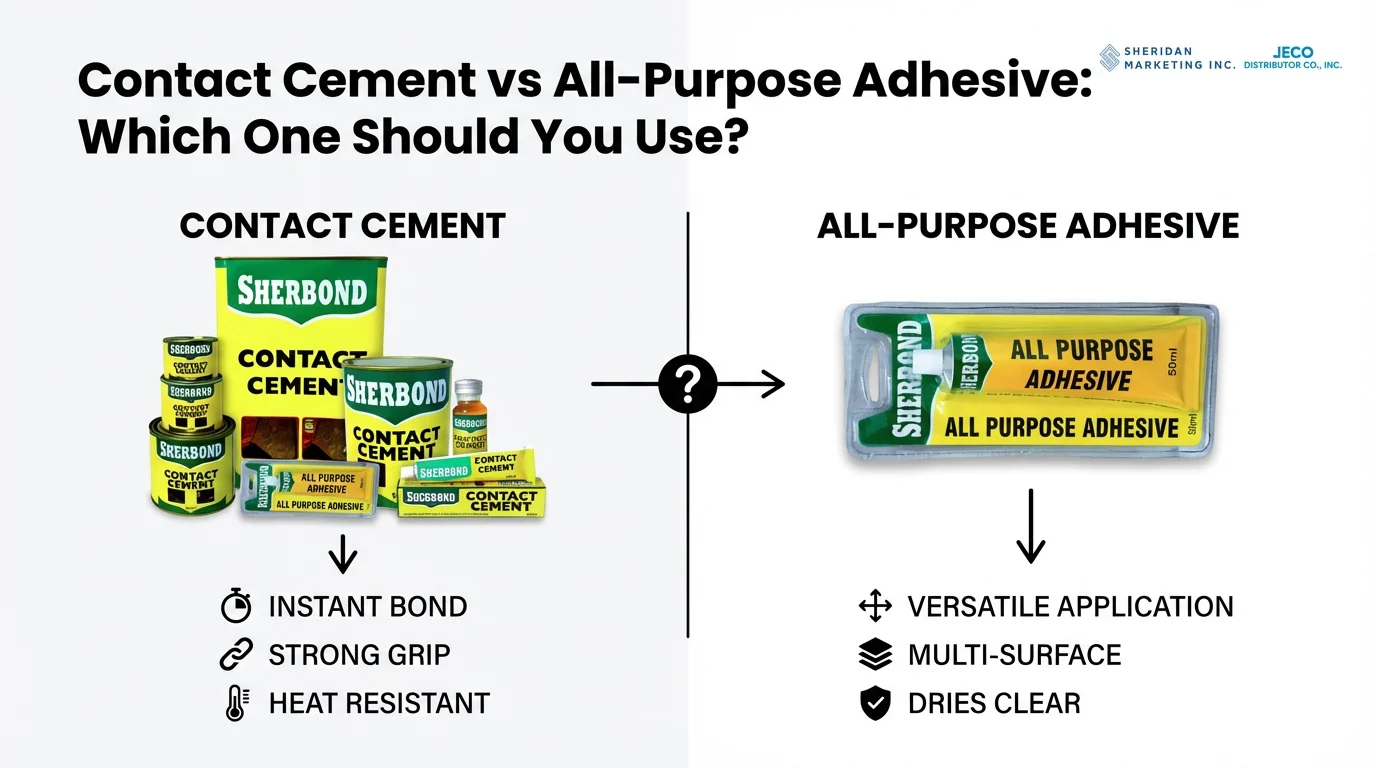
Contact cement is a strong adhesive designed to bond surfaces instantly when two coated sides come into contact. Unlike some adhesives that are joined while still wet, contact cement is usually applied to both surfaces first. It is then left to dry until tacky before the surfaces are pressed together.
Once contact is made, the bond is immediate and repositioning is usually difficult or impossible. This is why contact cement is often used for laminates, countertops, veneers, rubber sheets, leather applications, and surfaces where fast, strong adhesion is required across a broad area.
One of the biggest strengths of contact cement is its ability to create an even bond over large flat surfaces without clamping. It is especially effective where instant grip and long surface contact are needed.
What Is All-Purpose Adhesive?
All-purpose adhesive is a more general-use bonding product designed for a range of common materials and repair situations. Depending on the formulation, it may work on wood, plastic, ceramic, paper, fabric, foam, metal, and certain household surfaces.
Compared with contact cement, all-purpose adhesive is often more forgiving to use. It is suitable for quick repairs, general DIY tasks, decorative applications, and smaller bonding jobs. Some types remain adjustable for a short time before fully curing, which can be helpful when alignment matters.
When comparing contact cement vs all-purpose adhesive, all-purpose adhesive is usually the more flexible option for everyday use, while contact cement is the more specialized product for demanding surface bonding.
Key Difference in Application Method
One of the biggest differences in contact cement vs all-purpose adhesive is how they are applied.
Contact cement is usually spread onto both surfaces. After waiting for it to become tacky, the two surfaces are joined. The bond forms immediately on contact, so careful positioning is critical. This method is excellent for surfaces like laminate sheets, edge trims, and upholstery materials where strong initial grip is required.
All-purpose adhesive is often applied to one surface, though some products may vary. It usually allows a little more working time before the bond sets. This makes it easier for small repairs, craft work, and household fixes where repositioning is helpful.
If your project requires precise alignment after joining, all-purpose adhesive may be easier to control. If your project needs a strong, instant bond over a wide area, contact cement is often the better option.
Best Uses for Contact Cement
Understanding the ideal uses of contact cement is essential when evaluating contact cement vs all-purpose adhesive.
Contact cement is especially good for bonding laminates to wood or board surfaces, such as countertops, cabinets, and furniture panels. It is also widely used for leather, shoe repair, rubber sheets, automotive trims, and some upholstery applications.
Because it bonds quickly and strongly across flat surfaces, it is ideal when clamping is difficult or when the material needs to stay attached without shifting. It also performs well where flexibility is needed, such as certain rubber and vinyl applications.
However, contact cement may not be the best choice for porous surfaces that require deep penetration or for jobs where repositioning is important.
Best Uses for All-Purpose Adhesive
All-purpose adhesive shines in general repairs and versatile bonding tasks. It is often the preferred option for home improvement touch-ups, craft projects, minor furniture fixes, decorative attachment, and light material assembly.
When comparing contact cement vs all-purpose adhesive, all-purpose adhesive is better suited for smaller jobs where convenience matters more than industrial-grade instant bonding. It can be useful for bonding lightweight materials, fixing loose trim, attaching panels, repairing broken household items, or working on mixed-material applications.
Its versatility is what makes it popular in homes, workshops, and maintenance kits. Rather than buying multiple specialized adhesives, many users keep an all-purpose adhesive available for a wide range of common tasks.
Strength and Durability Comparison
A major question in the contact cement vs all-purpose adhesive comparison is strength. In general, contact cement provides a very strong bond across large bonded surfaces, especially when applied correctly. It performs well where a wide, flat, continuous contact area is involved.
All-purpose adhesive can also be strong, but its performance depends heavily on the material combination and the product formulation. For everyday household repairs, it may be more than enough. For laminates, rubber sheet bonding, or high-contact surfaces, contact cement is often the stronger and more reliable choice.
Durability also depends on environment. Some adhesives handle heat, moisture, and movement better than others. Always check the product’s specifications before use.
Flexibility and Finish
Flexibility is another important factor. Contact cement often remains slightly flexible after curing, which makes it useful for materials that may bend or expand slightly. This is helpful for laminate edges, rubber, and flexible trims.
All-purpose adhesive may dry harder or softer depending on the type. Some dry clear, which can be beneficial in visible applications. Others are better hidden inside joints or repair areas.
If appearance matters, think about squeeze-out, drying color, and finish. A cleaner application often leads to a better-looking final result, especially for decorative or visible work.
Drying Time and Working Time
When weighing contact cement vs all-purpose adhesive, working time plays a big role. Contact cement requires preparation and careful timing. You must wait for the adhesive to become tacky before joining, and after joining, repositioning is limited. This can be efficient for experienced users but less forgiving for beginners.
All-purpose adhesive often offers more open time, allowing adjustments before it fully cures. That makes it easier for repairs where alignment matters or where surfaces need to be held in place gradually.
If you need speed and instant hold, contact cement may win. If you need flexibility during assembly, all-purpose adhesive is often more user-friendly.
Which One Should You Use?
The answer depends on the type of work you are doing. If your project involves laminate installation, leather, rubber, broad-surface bonding, or applications where instant grip is needed, contact cement is typically the better choice.
If you are handling mixed-material repairs, household fixes, decorative projects, or general-purpose DIY work, all-purpose adhesive is usually the more practical and versatile option.
The best way to decide between contact cement vs all-purpose adhesive is to look at the material, surface area, stress level, and bonding method required. Adhesives are not one-size-fits-all products. Choosing based on the actual job leads to stronger and longer-lasting results.
Final Thoughts
Understanding contact cement vs all-purpose adhesive helps you avoid bonding mistakes and choose the right product for the task. Both adhesives have valuable uses, but they work best under different conditions.
Contact cement is ideal for strong, immediate bonding across flat surfaces like laminates, rubber, and leather. All-purpose adhesive is better for convenient, everyday repairs and lighter DIY applications across a wider range of materials.
Before starting your next project, take a moment to match the adhesive to the job. The right choice improves bond strength, saves time, and helps ensure your repair or installation lasts.