
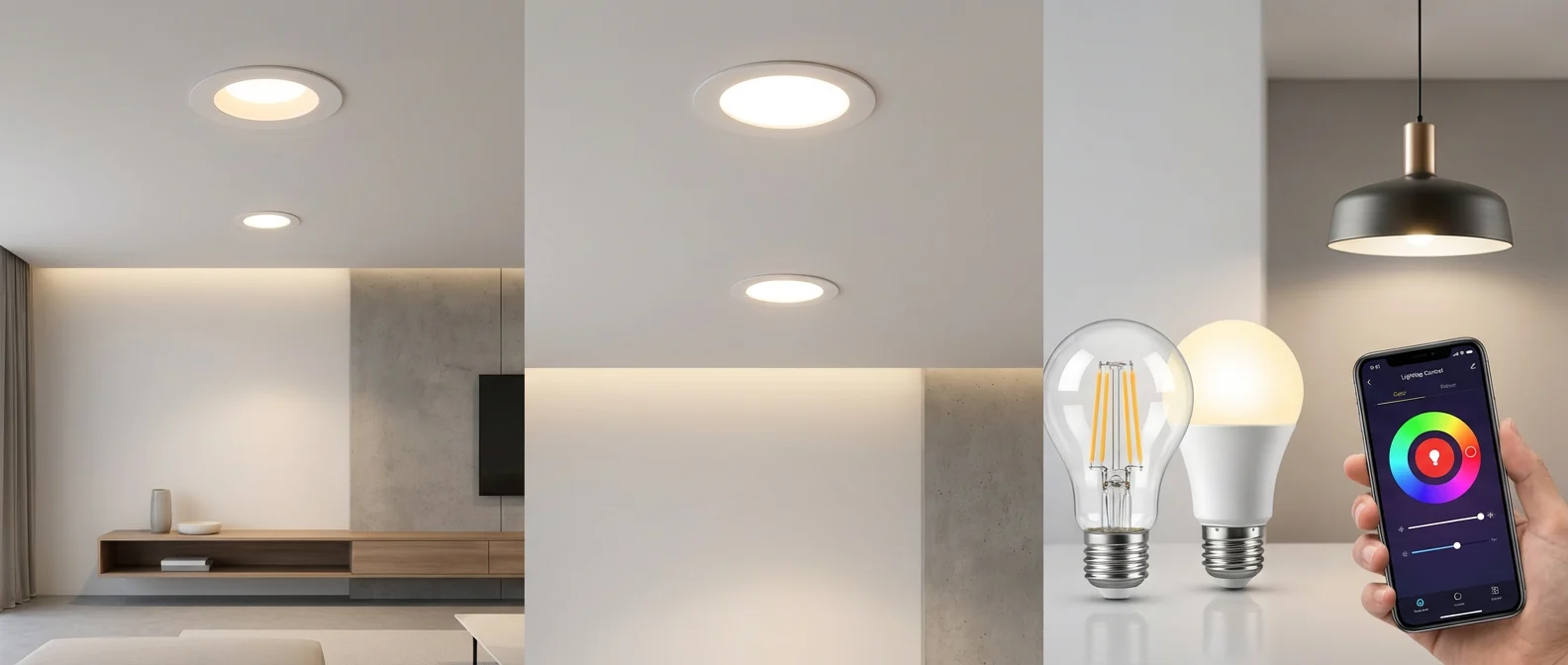
Lighting does more than simply brighten a room. It influences comfort, productivity, mood, safety, and even the way colors and finishes appear inside a space. Choosing the right LED lighting for any space is one of the most important decisions for homes, offices, retail stores, workshops, and commercial environments.
LED lighting has become the preferred solution for modern spaces because it offers long life, energy efficiency, consistent performance, and a wide range of styles and color temperatures. However, many people still struggle to choose the right LED light because there are so many options available. From warm white to daylight, from recessed downlights to panel lights, the choices can quickly become overwhelming.
This guide explains how to select the right LED lighting for any space by understanding brightness, color temperature, room function, fixture type, and installation purpose.
Why LED Lighting Is the Best Choice Today
LED lighting is popular because it combines performance with efficiency. Compared to traditional incandescent or fluorescent bulbs, LEDs use less power while producing strong, reliable illumination. They also last longer, which helps reduce replacement costs over time.
Another major advantage of LED lighting is flexibility. It can be used for ambient lighting, task lighting, accent lighting, decorative lighting, and outdoor illumination. Whether you are lighting a kitchen, office, hallway, warehouse, showroom, or bedroom, there is an LED solution designed for the space.
When choosing the right LED lighting for any space, it is important to think beyond wattage. Modern LED selection is based more on lumens, color temperature, beam spread, and intended function.
Understand Brightness: Lumens Matter More Than Watts
One of the most common mistakes people make is choosing lights based only on wattage. With LED lighting, lumens are the better measure because they indicate how much light the fixture actually produces.
A higher lumen output means a brighter light. Small decorative areas may need only a modest amount of brightness, while workspaces and kitchens require stronger illumination. For example, a hallway may need soft general lighting, while a workshop or task station needs brighter, more focused LED lighting.
If your goal is to find the right LED lighting for any space, start by identifying how the room will be used. The more detailed or visual the activity, the more brightness you will generally need.
Choosing the Right Color Temperature
Color temperature affects how warm or cool a space feels. It is measured in Kelvin, and it plays a major role in selecting the right LED lighting for any space.
Warm white lighting, usually around 2700K to 3000K, creates a cozy and comfortable atmosphere. It works well in bedrooms, living rooms, lounges, and hospitality areas where relaxation matters.
Neutral white lighting, usually around 3500K to 4000K, offers a balanced appearance that feels clean but not too harsh. It is suitable for kitchens, offices, bathrooms, hallways, and multi-purpose commercial interiors.
Cool white or daylight lighting, around 5000K to 6500K, creates a crisp and highly visible environment. This is often preferred for garages, workshops, utility areas, and spaces where clarity and alertness are important.
The best color temperature depends on the purpose of the room. Comfort-focused spaces benefit from warmer tones, while functional areas usually need more neutral or cooler lighting.
Match LED Lighting to the Function of the Space
A practical way to choose the right LED lighting for any space is to think in terms of activity. Ask what happens in the room and what type of visibility is needed.
In living rooms, lighting should feel welcoming and layered. Soft ambient light from ceiling fixtures can be combined with accent lighting from lamps or wall lights. Bedrooms should generally use warm LED lighting that promotes rest and comfort.
Kitchens need brighter and clearer illumination because they are active work areas. Under-cabinet LEDs, ceiling downlights, and focused task lighting are useful for food preparation and cleaning. Bathrooms benefit from clean, even lighting, especially around mirrors and sinks.
In offices, lighting should support focus and reduce eye strain. A neutral white LED is often ideal because it helps create a bright and professional environment without being too cold. Retail spaces need lighting that enhances product visibility and creates an appealing shopping experience. Workshops and garages require practical, high-output LED fixtures that improve detail visibility and safety.
Types of LED Fixtures to Consider
Choosing the right LED lighting for any space also means choosing the right fixture type. Different fixture styles serve different lighting goals.
LED bulbs are a simple replacement option for existing sockets and fixtures. They are useful for standard residential and commercial applications. Downlights are popular for clean ceiling designs and modern interiors. Panel lights are often used in offices, clinics, classrooms, and retail areas because they distribute light evenly across a wider space.
Strip lights work well for accent lighting, cabinetry, shelving, cove lighting, and display areas. Floodlights are ideal for exteriors, security lighting, and outdoor work zones. Pendant lights can add both task lighting and decorative value over dining areas, counters, and reception desks.
Choosing a fixture should always be based on where the light is needed, how wide the coverage should be, and whether the space needs ambient, task, or decorative lighting.
Energy Efficiency and Long-Term Savings
One of the strongest reasons people switch to LED is energy savings. LED lights consume significantly less electricity than older lighting technologies, making them a practical choice for both homes and businesses.
If you are choosing the right LED lighting for any space, look for efficient products with good performance ratings and reliable quality. While low-cost options may seem appealing, better-quality LEDs often provide longer life, better brightness consistency, and more dependable color performance.
For businesses, energy-efficient LED lighting can lower operating costs over time. For homeowners, it helps reduce monthly utility expenses while improving daily comfort and convenience.
Consider Beam Angle and Light Distribution
Not all lights spread illumination the same way. Some LED lights have a narrow beam for focused areas, while others have a wider beam for general room coverage. This makes beam angle an important part of choosing the right LED lighting for any space.
A narrow beam works well for display lighting, highlighting artwork, or directing light onto specific work zones. A wide beam is better for general room lighting and open spaces. In larger rooms, combining multiple lights often produces better balance than relying on a single bright fixture.
Good lighting design is about even distribution, not just brightness. Rooms should feel comfortable and functional without harsh shadows or overly bright glare.
Dimmable and Smart LED Options
Modern LED systems can offer more control than ever before. Dimmable LEDs allow you to adjust brightness based on the time of day, activity, or mood. This is especially useful in living rooms, dining spaces, bedrooms, and hospitality settings.
Smart LED lighting adds scheduling, remote control, automation, and app-based customization. These features can improve convenience, energy management, and user experience. When selecting smart or dimmable products, always make sure the fixture, bulb, and switch or control system are compatible.
Common Mistakes to Avoid
When trying to find the right LED lighting for any space, several common mistakes should be avoided. One is choosing lights that are too cool for comfort-based rooms, which can make the space feel harsh or clinical. Another is using lighting that is too dim for task-heavy areas, reducing visibility and efficiency.
Poor fixture placement is another issue. Even high-quality LEDs will underperform if installed in the wrong location or with poor spacing. Mixing inconsistent color temperatures in the same room can also create an unbalanced and unattractive result.
Finally, do not ignore product quality. A cheap LED may save money upfront but may fail earlier, flicker, shift color, or deliver inconsistent brightness.
Final Thoughts
Choosing the right LED lighting for any space is about more than selecting a bulb. It involves understanding how the space is used, how much brightness is needed, what color temperature suits the room, and which fixture type will deliver the best result.
From homes and offices to retail stores and work areas, LED lighting offers a practical, energy-efficient, and flexible solution for modern environments. When chosen correctly, it improves visibility, enhances comfort, supports productivity, and creates a more polished overall atmosphere.
Before making a lighting decision, think about the purpose of the space first. Once you align lighting with function, comfort, and design, it becomes much easier to choose an LED solution that truly works.